

Light and solar performance of glass
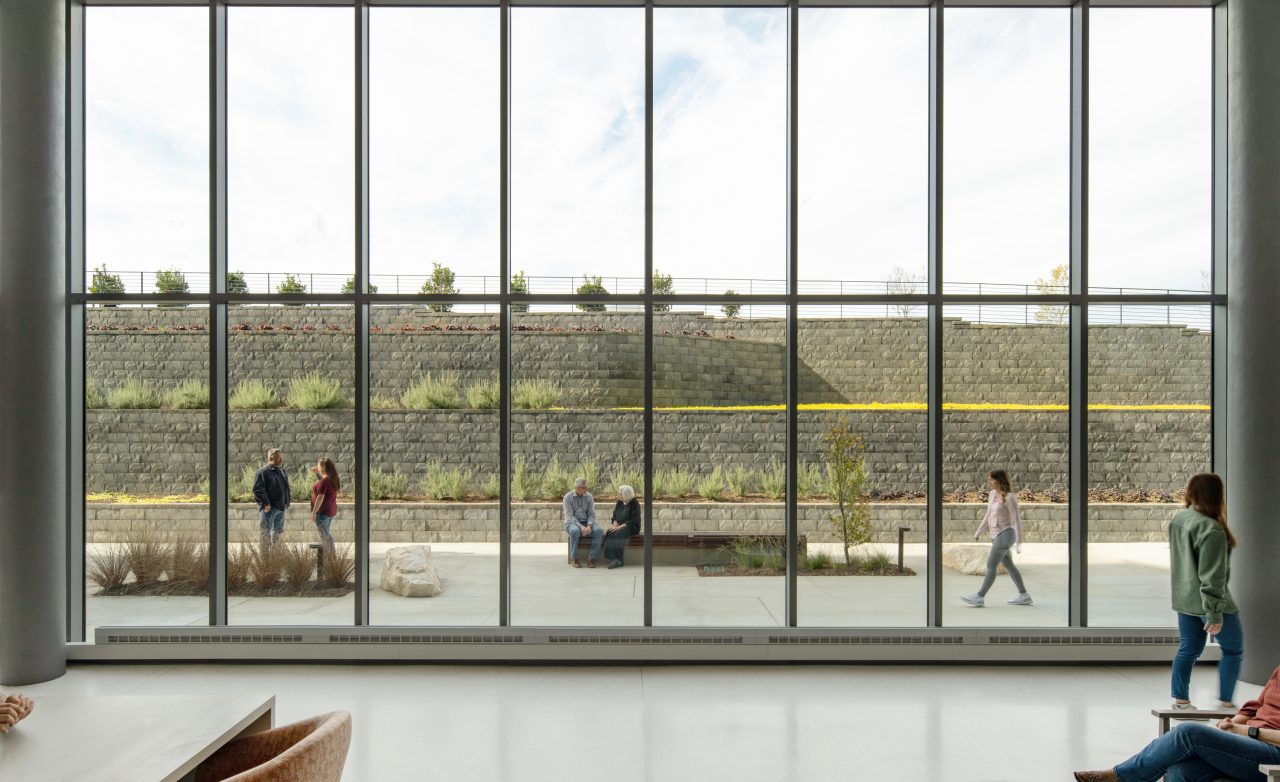
How architectural glass interacts with light to help improve thermal and visual comfort, and energy efficiency.
Glass in buildings must do more than look good — it plays an important role in how much light and heat enters a space. The right glass can brighten interiors with natural daylight, reduce glare, and limit solar heat gain to help control energy use. This balance between light and heat defines the solar performance of glazing and can play a key role in occupant comfort, visual clarity, and the energy performance of the building.
How glass interacts with sunlight
The sun’s electromagnetic radiation reaching the Earth’s surface is known as solar energy. It consists of approximately 49% energy in the visible range, 49% energy in the near-infrared range, and 2% in the ultraviolet range, although these proportions can vary with environmental conditions.
When sunlight hits a glass surface, three things happen:
- Transmission: light and heat pass through the glass into the building
- Reflection: some energy bounces off the glass surface
- Absorption: part of the energy is absorbed by the glass, where it can later be re-radiated as heat
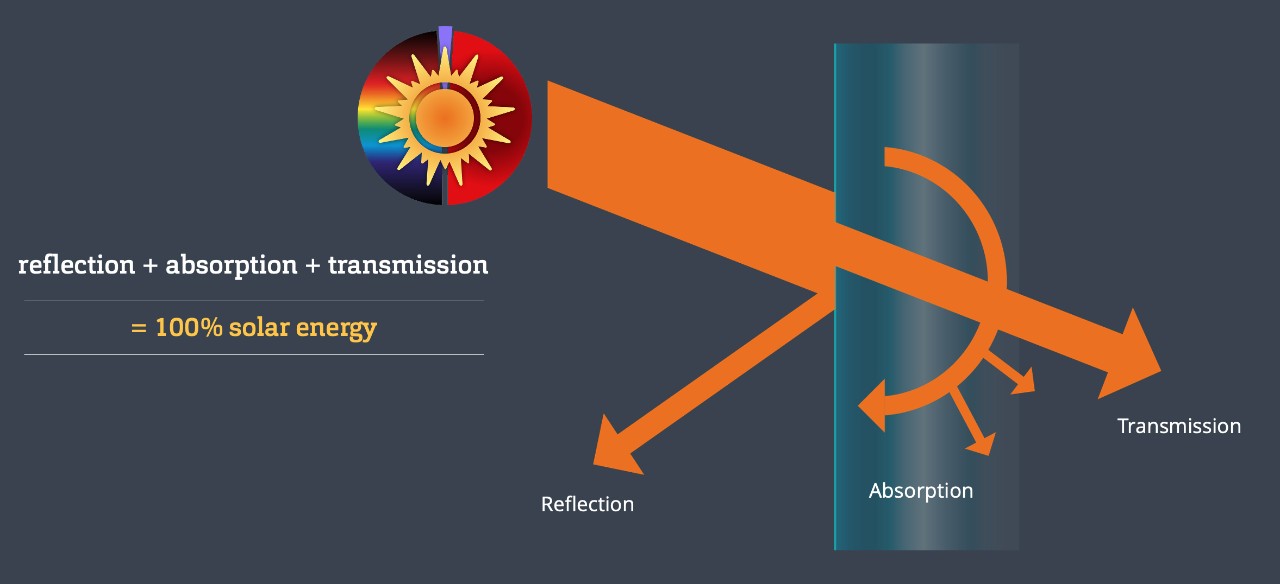
Each type of glass — clear, tinted, or coated — affects these interactions differently. Understanding how these optical behaviors are measured helps architects and glass specifiers select glass that performs well for their project’s climate and orientation.
Visible light performance
Letting in natural daylight improves visual comfort and reduces the need for artificial lighting. Glass performance in this area is defined by:
- Visible Light Transmittance (VLT) – The percentage of visible light that passes through the glass into a space. A higher VLT results in brighter interiors.
- Visible Light Reflectance – The percentage of visible light reflected from the glass surface. This affects the glass’s appearance and potential for glare.
- Color Rendering Index (CRI) – A scale from 0 to 100 that measures how accurately colors appear when viewed through the glass. Low-iron glass typically has a high CRI, while tinted or thicker glass may reduce it.
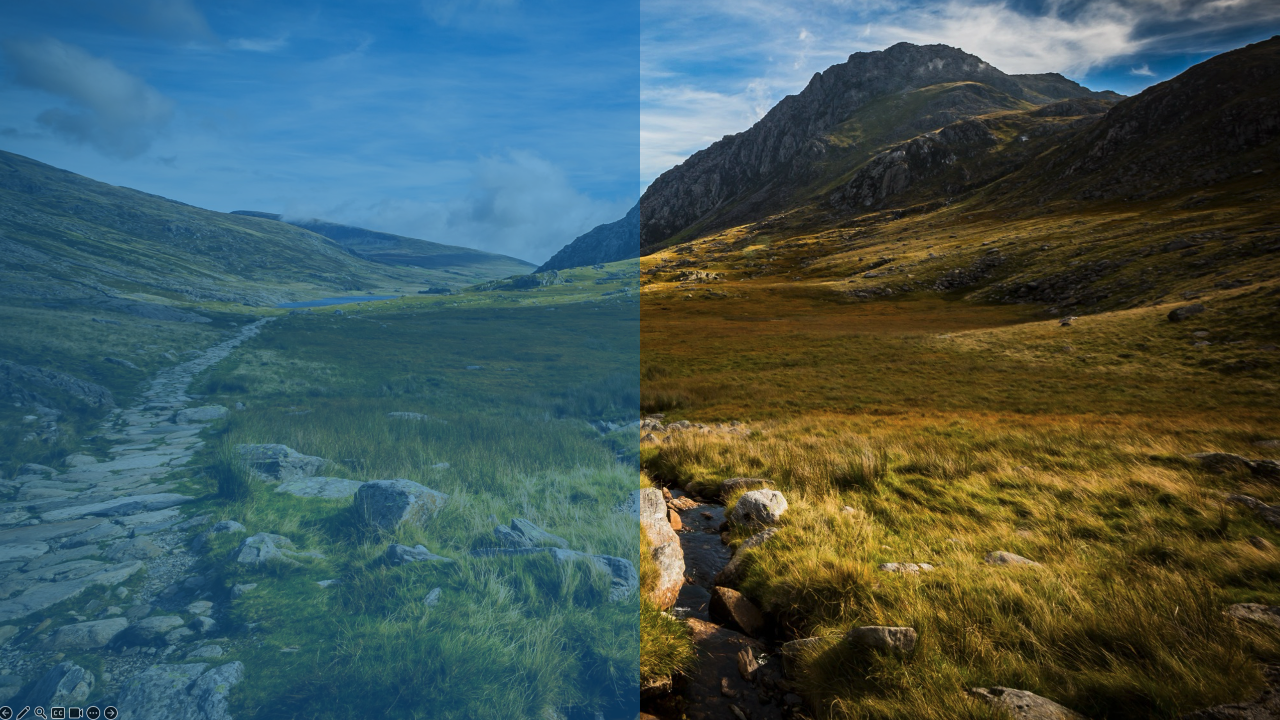
10 mm monolithic dark blue glass, tinted and thicker
CRI = 60
6 mm monolithic low iron glass, neutral color and thinner
CRI = 100
Ultraviolet and infrared performance
Beyond visible light, solar radiation includes ultraviolet (UV) and infrared (IR) components:
- Ultraviolet Transmittance – The amount of UV radiation that passes through the glass. Lower transmittance helps protect furniture, flooring, and artwork from fading.
- Infrared Management – The reflection or absorption of near-infrared wavelengths, which carry most of the sun’s heat. Effective IR management can significantly reduce unwanted solar heat gain.
Low-E and solar control coatings are designed to block part of IR while allowing in visible light — thereby helping to improve energy efficiency without darkening the space.
Solar energy performance metrics
Solar energy management is measured using several key metrics:
- Solar Heat Gain Coefficient (SHGC) (North America, Middle East & Africa, Asia Pacific) / Solar Factor (g-value) (Europe, South America) – the total percentage of solar energy that enters the building through the glass. This includes both directly transmitted energy and the heat re-radiated inward after absorption. A lower g-value or SHGC means better control of solar heat gain.
- Shading Coefficient (SC) – A ratio comparing the solar performance of a glass to 3 mm clear float glass (with SC = 1.0). SC is commonly used in HVAC design.
- Solar Absorptance – The proportion of solar radiation absorbed by the glass.
- Solar Reflectance – The portion of solar radiation reflected away.
Metric | What is measured? | What is better – lower or higher? |
|---|---|---|
SHGC / g-value | Total solar heat gain | Lower: predominantly for hot climates, or facades with high exposure to the sun. Higher: predominantly for cold climates, where passive heating of interiors is desired. |
Shading Coefficient | Comparison to reference clear glass | Lower: predominantly for hot climates, or facades with high exposure to the sun. Higher: predominantly for cold climates, where passive heating of interiors is desired. |
Absorptance | Heat absorbed by the glass | Lower: absorbed solar energy is re-radiated as heat into the interior, raising indoor temperatures, therefore a lower absorptance helps to limit unwanted heat gain and to reduce the risk of overheating. In colder climates, glass with a high absorptance can contribute to passive heating but is often less suitable, as it may also reduce natural light transmission. |
Reflectance | Heat reflected away from the building | Higher: predominantly for hot climates, or facades with high exposure to the sun. Lower: predominantly for cold climates, where passive heating of interiors is desired. |
Spectral selectivity (light-to-solar gain ratio)
Spectral selectivity is the ratio of visible light transmittance (VLT) to total solar energy transmittance (g-value or SHGC). It indicates how efficiently a type of glass admits daylight while limiting solar heat gain.
- In North America, this ratio is commonly known as the light-to-solar gain ratio (LSG)
- In Europe, this is referred to as spectral selectivity
A higher value means more daylight with less heat — for example, an LSG of 2.0 means the glass lets in twice as much visible light as solar heat, making it an excellent choice to help maximize daylighting and reduce cooling loads.
Silver plays a critical role in enhancing spectral selectivity of sputter coated glass. The more silver layers a coating contains — such as in double or triple silver coatings — the more selective the glass becomes. This allows it to significantly reduce solar heat gain while maintaining high visible light transmission.
Choosing the right glass for your climate
- In hot climates or facades with high sun exposure: choose low SHGC / g-value glass to reduce solar gain
- In cold climates or facades with low sun exposure: consider higher SHGC / g-value to benefit from passive solar heating
- In moderate climates or facades with medium sun exposure: use selective coatings to help balance comfort and energy use year-round
👉 Expert tip:
Selecting the most appropriate glass for an architectural project involves many factors, including orientation, building use, shading strategy or shading from nearby structures, local regulations, energy performance requirements, and overall design priorities. Our team of glass experts can help navigate these project-specific parameters to identify the most suitable glass option.
Digital tools to explore light and solar performance of glass
We offer tools that make it easy to compare and evaluate glass performance:
- Digital Glass Selector – Filter Guardian Glass products by performance criteria and aesthetics. Explore glass options for your project.
- Glass Visualizer – View realistic renderings of products and compare glass options appearance under different sky conditions and viewing angles. Visualize glass options.
- Performance Calculator – Perform advanced glazing calculations, modelling the thermal, optical, acoustic and embodied carbon values for our glass products. Connect to the Resource Hub to access the Performance Calculator.
Use these tools early in the design process to help achieve the right balance of light, solar control, and aesthetic appeal.

