
Responsible management of resources and waste

Stewardship involves managing our actions and resources in a responsible manner that respects the rights of others. In our manufacturing operations, we strive to make efficient use of materials and energy, reduce waste where feasible, and identify opportunities to reuse resources that might otherwise be discarded. The examples below highlight some of the ways we are working to keep valuable resources in use, support manufacturing efficiency and explore innovative approaches across the glass lifecycle.
Using cullet in our glass manufacturing
Cullet is broken or rejected glass that is used as a raw material in the glassmaking process. It can replace a portion of the virgin raw materials typically used to manufacture float glass, such as sand, soda ash and limestone.
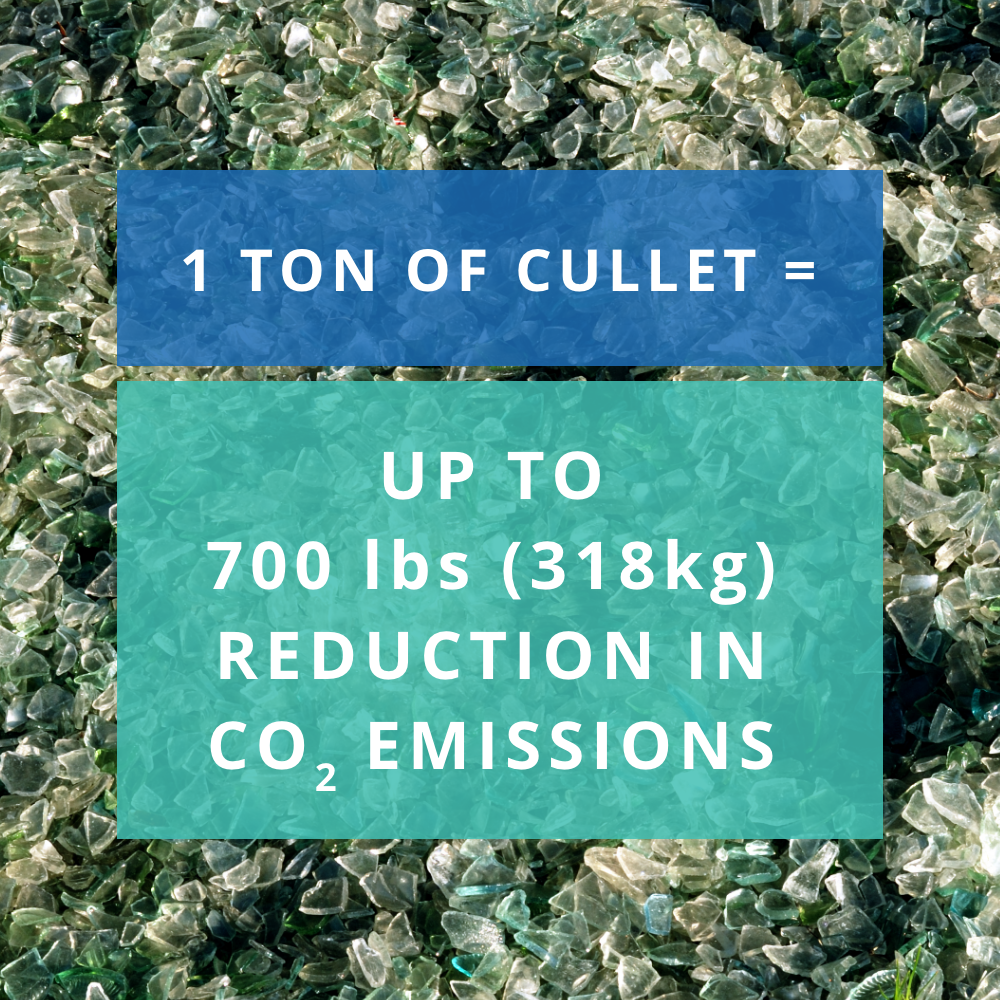
The use of 1 ton of cullet saves approximately 1.2 tons of virgin raw materials such as sand, dolomite, soda ash and limestone.
Using cullet also reduces process-related emissions. As it has already undergone the mineralization process, it releases fewer greenhouse gas emissions during melting than virgin raw materials. Every ton of cullet used can avoid the consumption of 2 million BTUs (586 kWh) of natural gas and reduce carbon dioxide (CO2) emissions by up to 700 lbs (318 kgs).
While our efforts may vary across our global fleet, in general, we are working to increase the cullet ratio in our batch by:
- Optimizing use of internal cullet
- Sharing best practices across the fleet
- Testing and implementing new cullet types
- Maximizing cullet sourcing
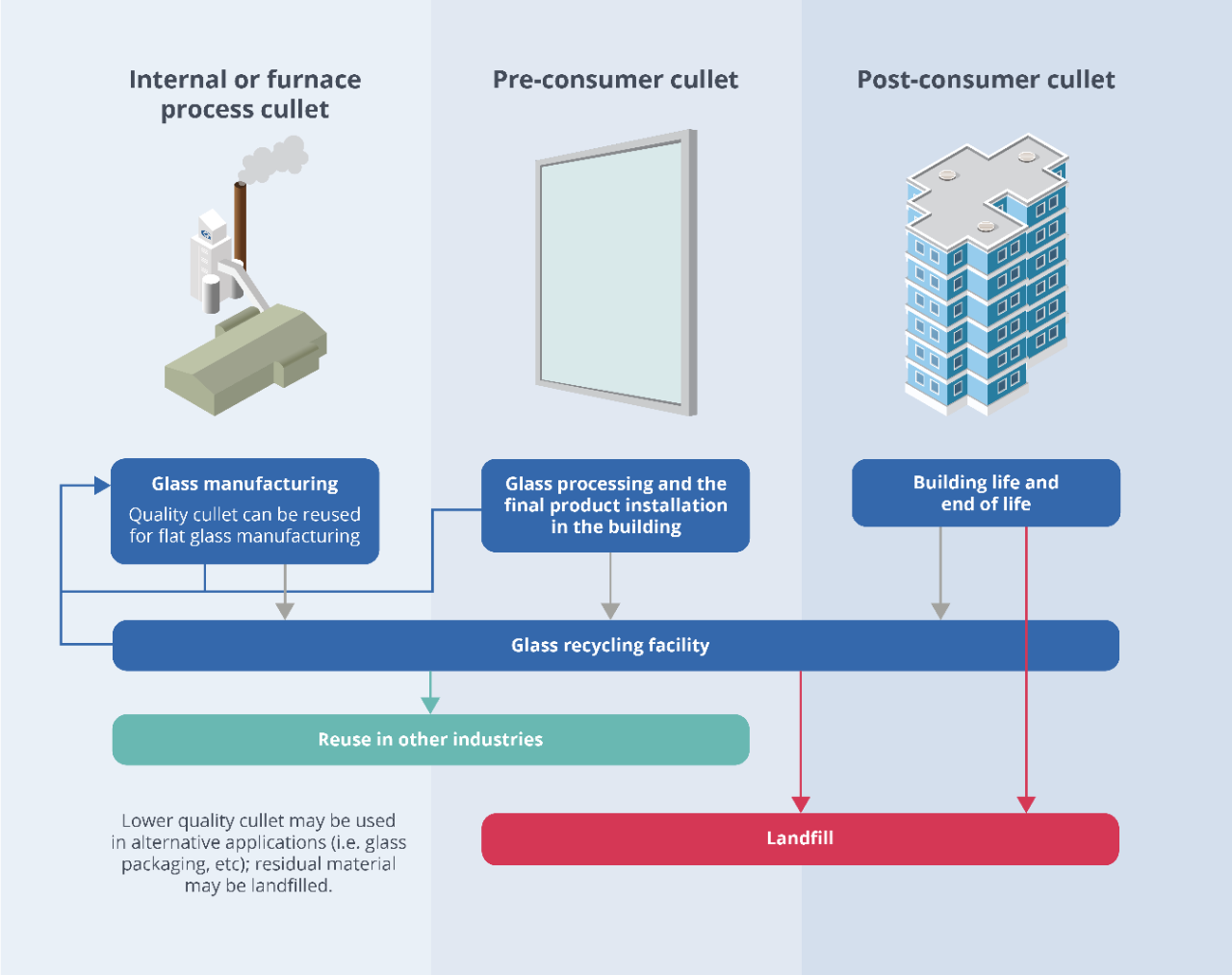
We use several types of cullet in our manufacturing processes.
Internal or furnace process cullet: broken or rejected glass generated during our own manufacturing processes that can be returned directly to production.
Internal or furnace process cullet is not considered as recycled content.
Pre-consumer cullet: comes from glass that has completed manufacturing but has not reached its final end use. Examples can include offcuts and scrap generated during glass processing at a Guardian Glass facility or one of its customers' plant, glass fabrication or installation.
Pre-consumer cullet is considered as recycled content.
Post-consumer cullet: comes from glass that has reached the end of its useful life and has been collected for recycling. Examples include glass recovered from homes and buildings undergoing renovation or demolition.
Post-consumer cullet is considered as recycled content.
Our use of cullet
The amount of cullet that can be used in float glass production varies from site to site and can change over time. Availability, consistency and quality of cullet all influence how much can be incorporated into the batch.
Maintaining the quality of the glass we produce is a key consideration. Lower quality cullet may introduce contaminants that can affect glass quality and manufacturing performance. In some cases, we may reduce cullet usage when suitable quality material is not available.
While cullet use can vary from year to year, Europe and North America have demonstrated a consistent progression over time. In both regions, increased use of pre consumer cullet has contributed to this progression and supports higher recycled content levels in the products they manufacture.
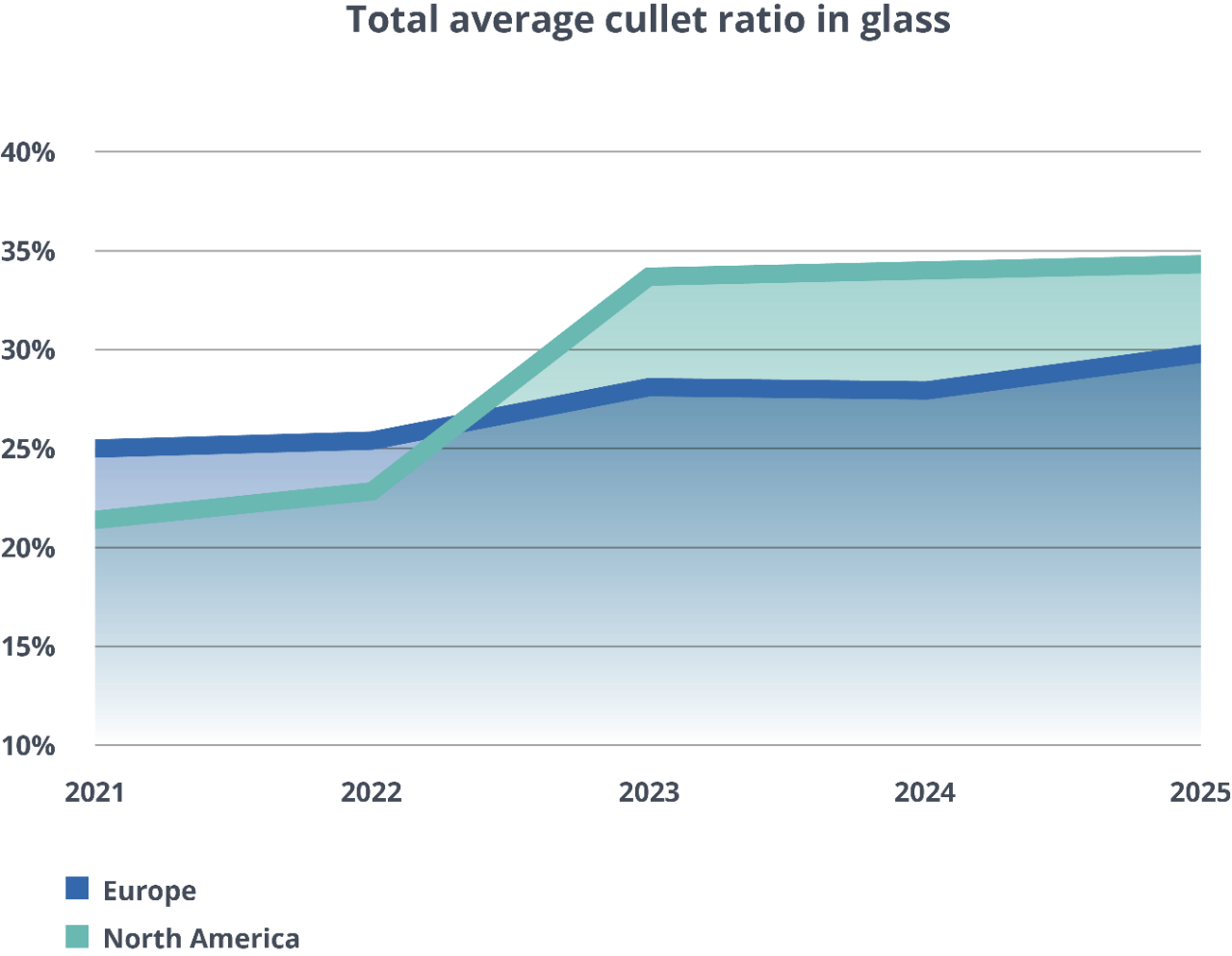
*Results are based on specific plant implementations and may vary depending on furnace design, operating conditions and other site-specific factors.
Need region specific recycled content information for your project? Go to the Resource Hub to download our cullet and recycled content letters for the regions where we operate.
Higher cullet use in practice: Guardian NEXA™ 6 in Europe
Guardian NEXA™ 6 lower carbon glass illustrates how increased cullet use can contribute to reducing the embodied carbon of float glass. With a total cullet ratio in glass of 52% and an average recycled content of 25%*, Guardian NEXA™ 6 achieves an A1 to A3 embodied carbon value of 6.47 kg CO₂e/m² for a 4 mm glass thickness, representing a reduction of more than 30% compared with standard 4 mm Guardian ExtraClear™ float glass. This embodied carbon value is derived from the Guardian NEXA 6 Environmental Product Declaration, which was published in July 2026, after ongoing verification for conformance to ISO 14040/44, EN 15804 and the applicable Product Category Rules through a program operator and independent reviewer.
*Based on internal production data from calendar year 2025, the recycled content contains approximately 24% cullet and 1% other recycled material.
Understanding the cullet cycle
Glass can be recovered and reused at multiple stages throughout its lifecycle.
Reduced EP Dust landfilled
Flue gas containing dust particles is generated in a glass furnace during the melting of raw materials. Guardian Glass has invested in electrostatic precipitator technology, a closed loop filterless system that precipitates those fine particles into a dust (i.e., electrostatic precipitator dust, or EP Dust) that can be reused as a raw material in our float glass manufacturing process. Where compliant with local laws, several of our float glass facilities in Europe, North America and South America have reintroduced EP Dust into the furnace, thereby reducing the demand for certain raw materials and minimizing the amount of EP Dust sent to landfill.
In 2025 alone, approximately 2,000 metric tons of EP Dust were reused across these regions.
Using calumite slag as an alternative raw material
In Europe, at one of our float lines, we use calumite slag as an alternative source of alumina in float glass manufacturing.
Its melting and refining properties can provide several benefits:
- Helps reduce furnace energy consumption by melting more readily than some crystalline raw materials, such as limestone and dolomite.
- Supports lower furnace operating temperatures by helping dissolve sand grains more quickly during the melting process.
- Can help reduce carbon dioxide emissions by replacing carbonate based raw materials, helping reduce the associated emissions.
- Can help reduce fuel related emissions by lowering the amount of energy required during glass production, which may also contribute to reduced nitrogen oxide (NOx) emissions.
- May contribute to improved glass quality through its melting and refining characteristics.
In 2025, the site has used approximately 4,000 metric tons of calumite slag.
Power generation
Guardian Glass has invested in on-site renewable electricity generation at selected manufacturing facilities.
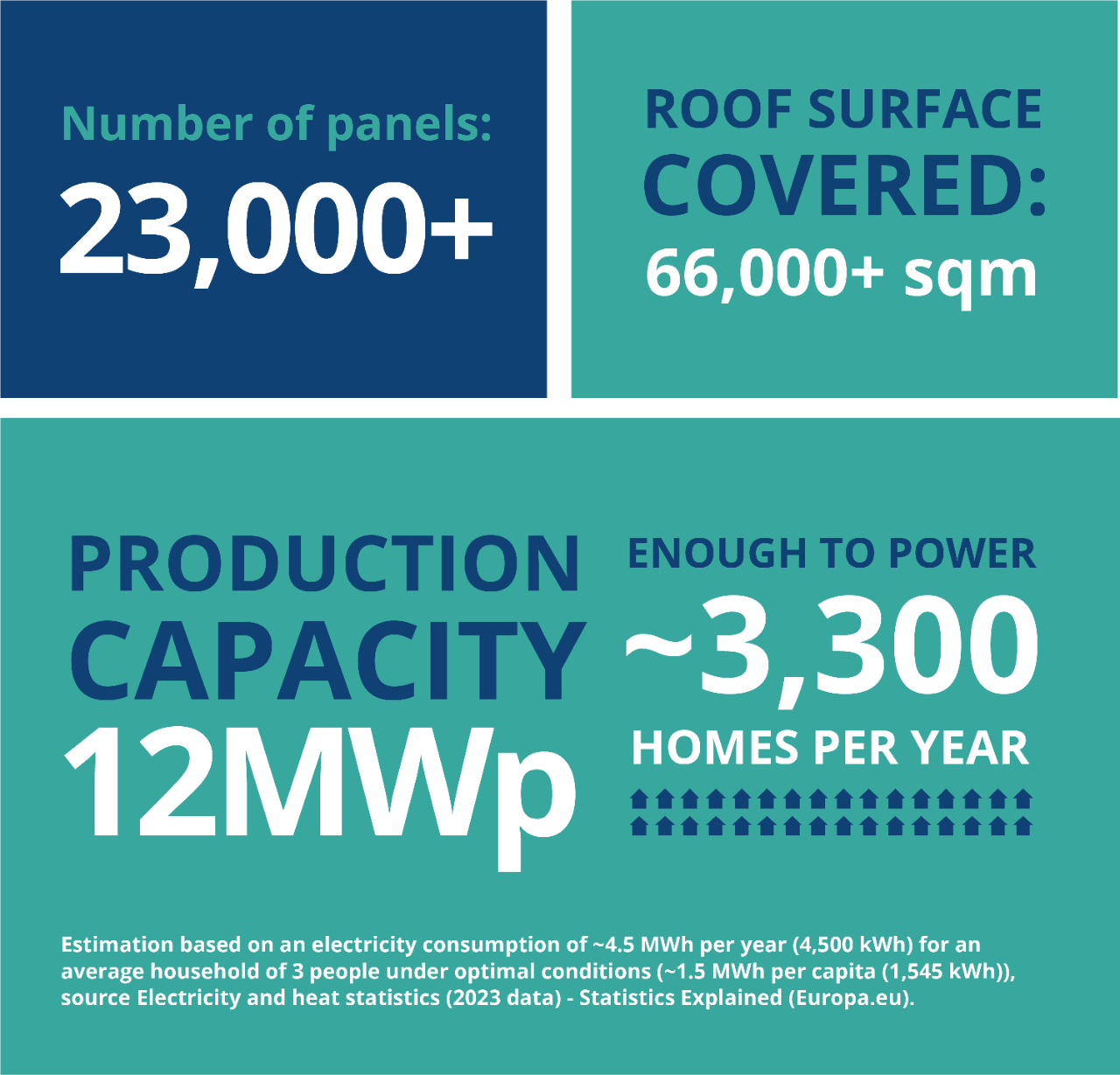
In Bascharage, Luxembourg, our site features more than 11,000 photovoltaic panels installed across more than 25,000 m² of roof space. The installation began producing electricity in August 2024 and supplies ~11% of the plant's total annual electricity consumption. During periods of optimal solar production, it can satisfy around 75% of the plant's instantaneous electricity demand on a typical fully operational weekday.
In Tudela, Spain, a solar farm began producing electricity in May 2025. The installation includes more than 12,000 photovoltaic panels installed across more than 41,000 m² of roof space. During periods of optimal solar production, the solar farm can supply almost 100% of the plant's electricity demand. Between January and July 2026, it provided ~ 22% of the plant's total electricity consumption.
PVB recycling
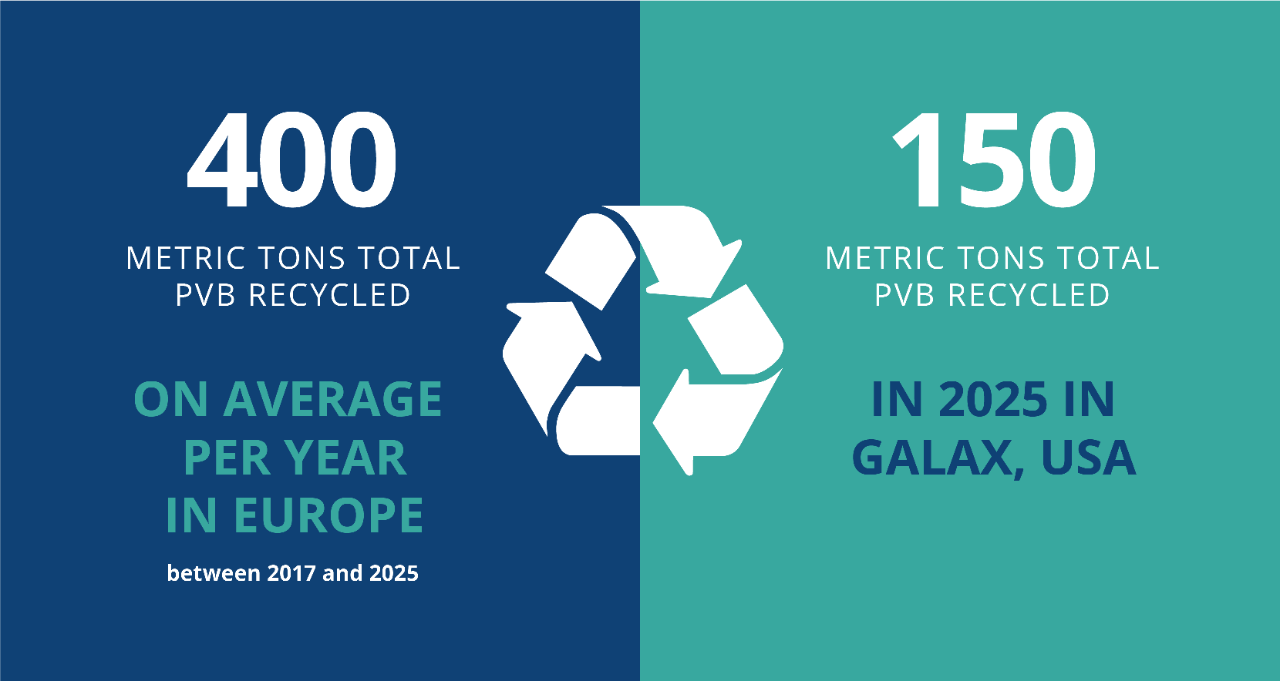
Lamination lines at five of our manufacturing sites in Europe, together with our fabrication site in Galax, Virginia, USA, recycle polyvinyl butyral (PVB) trims for reintroduction into our suppliers' PVB manufacturing processes. Between 2017 and 2025, the European sites recycled on average approximately 400 metric tons of PVB per year through these programs. In 2025, the Galax fabrication site recycled approximately 150 metric tons. Supplier recycling of PVB trims depends on the type and quality of the material.
This initiative is also an example of a mutually beneficial partnership with our suppliers. By incorporating recycled PVB trims into their manufacturing processes, suppliers can increase the use of recycled content in their products, while helping divert material from disposal and supporting resource efficiency across the value chain.