

Physical properties of glass
The characteristics that define how glass behaves
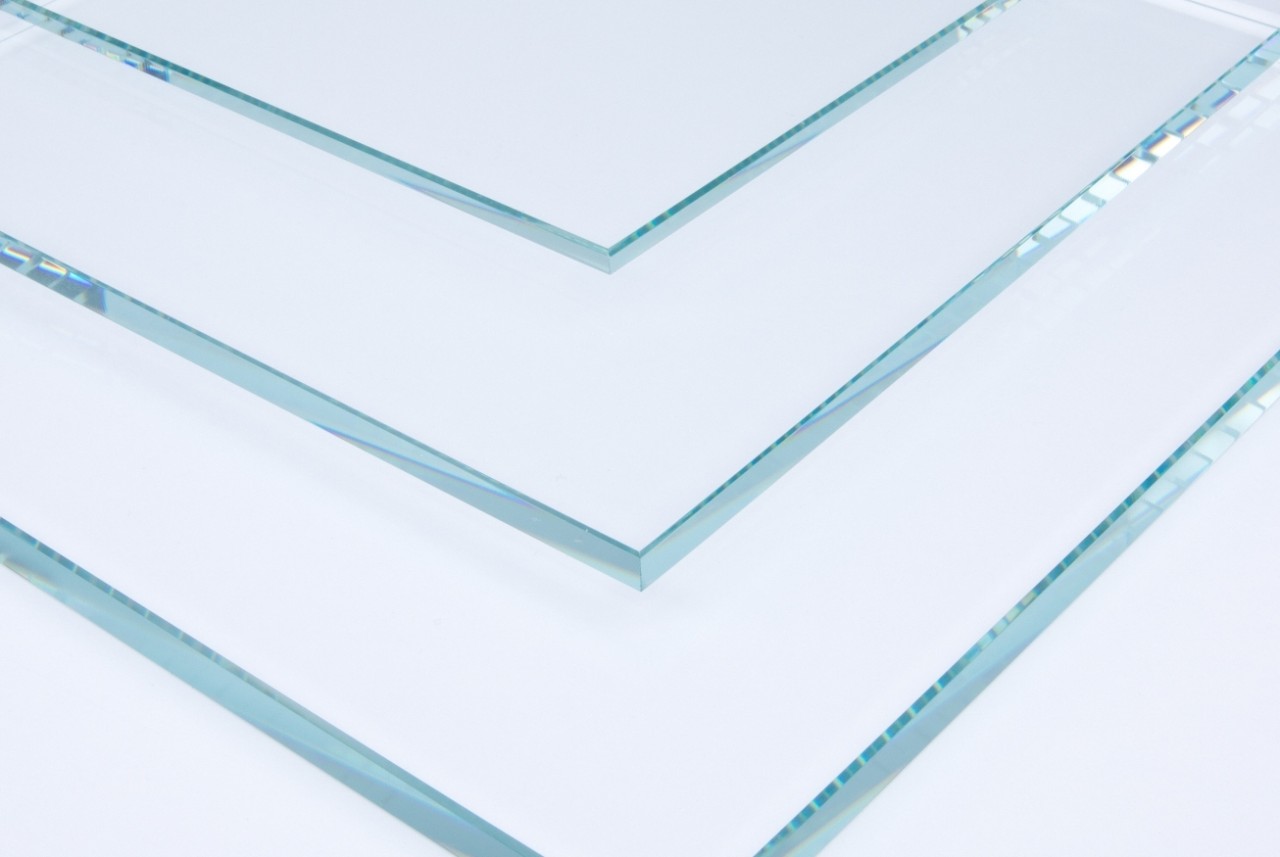
Modern architectural glass is more than just transparent—it’s a carefully engineered material with predictable strength, durability, and thermal behavior. Here’s a breakdown of key physical properties to help you understand what makes float glass such a versatile solution in buildings across the globe.
Glass density and weight
Density refers to how much mass is contained into a given volume of glass. It affects how heavy a glass pane is and helps determine structural needs.
- Density of float glass:
2,500 kg/m³ (or 156 lb/ft³)
That means 1 mm of thickness equals 2.5 kg/m² (or 0.51 lb/ft²).
Example: a 6 mm (1/4") float glass pane measuring 1.6 m x 1.3 m (63" x 51") weighs about 30 kg (66 lbs).
Glass thickness and weight table
Glass weight depends on thickness. Use this table to estimate the load or support needed when designing with glass (laminated glass includes a plastic interlayer and weighs slightly more than regular float glass):
Metric thickness | Metric weight (kg/m2) | Imperial thickness | Imperial weight (lb/ft2) |
|---|---|---|---|
Float 4 mm | 10 | 5/32" | 2.04 |
Float 6 mm | 15 | 1/4" | 3.07 |
Float 10 mm | 25 | 3/8" | 5.12 |
Laminated 66.1 | 31 | 1/2" | 6.35 |
Glass strength and durability
Compressive strength
Compressive strength measures how much pressure glass can resist before it is broken. Float glass performs well under compression.
Glass is very strong under pressure, with compressive strength between 700–900 MPa.
That’s about 100,000–130,000 psi — making it 10x stronger under compression than tension.
Tensile (bending) strength
Tensile strength, also called flexural strength, measures how much pulling or bending stress glass can withstand before breaking. Glass is more vulnerable to pulling forces than pushing ones, especially if its surface has small flaws. Because of this, its bending strength isn’t a fixed number. Instead, we use a statistically reliable value that assumes the probability of breakage based on standardized tests.
For example, the fracture probability for annealed glass subjected to a tensile stress of 45 MPa (6,500 psi) is 5%.
In North America, the glass ability to resist deformation under load is defined by the Modulus of Rupture (MOR).
Heat-treating the glass (heat-strengthened or tempered) can improve its strength. This can make it suitable for structural and load-bearing applications where glass is subjected to forces pushing down or across its surface—such as in balustrades, or high wind pressure on façades.
Scratch resistance (or hardness)
Scratch resistance describes how well the glass surface resists abrasion or damage from contact with harder materials, using the Mohs hardness scale.
On the Mohs hardness scale, float glass scores 5.5, similar to a steel knife.
That means it can resist most household abrasion, but not harder minerals like quartz or sand.
Glass thermal behaviour
Thermal expansion
Thermal expansion is the slight increase in length glass experiences as it gets warmer. This matters when glass is combined with other building materials. The coefficient of linear expansion measures how much glass’ volume changes with each degree of temperature change at a constant pressure.
- ~4.6 x 10⁻⁶ strain per ° F (8.3 x 10⁻⁶ strain per °C)
Thermal shock resistance
Thermal shock resistance shows how well glass can withstand sudden temperature changes without cracking.
- Glass can withstand surface temperature differences up to 40 K (40 °C / 72 °F).
- Exceeding this may cause breakage—tempered glass is recommended near heat sources.
Transformation and softening temperatures
The transformation (annealing) range is when glass begins to soften, and internal stresses are relieved. The softening point is when glass becomes malleable enough to deform or be shaped.
When glass is heated, it doesn’t suddenly melt—it gradually softens over a range of temperatures.
Transformation temperature range (aka annealing range): 520–550 °C (970–1,020 °F)
- This is the critical zone where the mechanical properties of glass begin to change.
- Internal stresses in the glass can be relieved (a process called annealing).
- Glass becomes softer and more flexible — but it doesn’t flow yet.
Softening point: ~600 °C (1,112 °F)
- The temperature at which glass starts to behave like a thick liquid.
- It can deform under its own weight and is ready for shaping or molding.
Temperature (ºC/ºF) | Stage | Description |
|---|---|---|
20-400ºC/70-200ºF | Solid | Glass is rigid, no significant changes |
520-550ºC/970-1,020ºF | Annealing/Transformation | Glass begins to soften and relieve stress |
~600ºC/1,112ºF | Softening Point | Glass flows and deforms under its own weight |
>650ºC/1,200ºF | Forming Zone | Used in shaping and full melting |
Heat-related values
Specific heat capacity
This is the amount of heat needed to raise the temperature of glass by 1 °C per kilogram. It relates to how quickly glass heats up or cools down.
- Specific heat capacity of float glass: ~840 J/kg·K.
Emissivity
The emissivity (ε) shows how much heat a glass surface emits. Glass naturally has high emissivity, but coatings can reduce it to improve thermal performance.
- The normal emissivity of float glass is ε = 0.89, which means 89% of the absorbed heat is re-radiated.
Chemical resistance
Chemical resistance describes how well glass withstands exposure to water, acids, and alkaline substances without surface damage or clouding.
- Chemical resistance of float glass is excellent to acids, except Hydrofluoric Acid (HF), but poor to alkalis.
Cement runoff or alkaline substances should be removed immediately to avoid surface damage.
In summary
Density | 2,500 kg/m3 (156 lb/ft3) |
Compressive Strength | 700-900 MPa |
Thermal Shock Limit | 40 K |
Scratch Resistance | 5.5 (Mohs scale) |
Linear Expansion | 4.6 x 10⁻⁶ strain per ºF (8.3 x 10⁻⁶ strain per ºC) |

Become a glass expert with the Guardian Glass Training Center, our dedicated e-learning platform

