

Visual appearance and color of glass
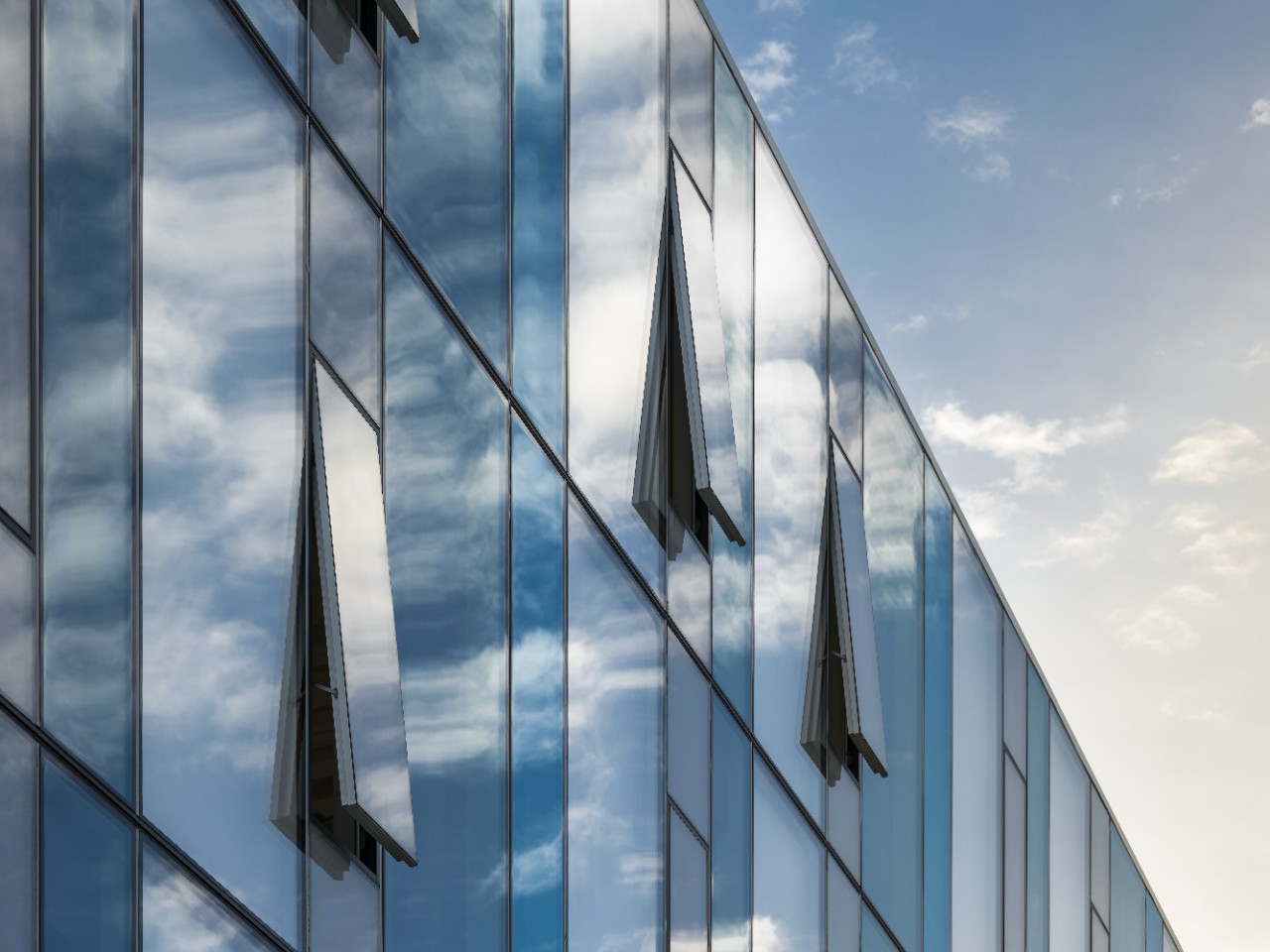
How glass looks, what affects its color, and how to evaluate its visual appearance.
From clear to colored, from neutral to mirror-like — glass comes in many visual styles. Understanding what gives glass its appearance, how it changes with lighting and coatings, and how to evaluate it, empowers architects to bring their creative vision to life through light, color and reflection.
What gives glass its color?
Standard float glass used in buildings has a subtle green tint from iron oxide in the raw materials. The thicker the glass, the more noticeable this color becomes, especially when viewed from the edge.
The color of glass can be influenced during manufacturing by adjusting its chemical composition — reducing iron content makes the glass clearer and less green, while adding elements like cobalt (blue), selenium (grey or bronze), or extra iron (deep green) creates more pronounced or tinted appearances.
Glass comes in a range of visual appearances, from nearly colorless to richly tinted:
- Low-iron glass: the most neutral and colorless option, offering maximum neutrality and light transmission.
Mid-iron glass: slightly more color than low-iron, with good neutrality and light performance.
Clear glass: standard float glass with a faint green hue, more noticeable at greater thickness or when viewed from the edge.
Tinted glass: available in a range of colors (blue, bronze, grey, green). Tinted glass not only affects color but also reduces glare and solar heat gain.
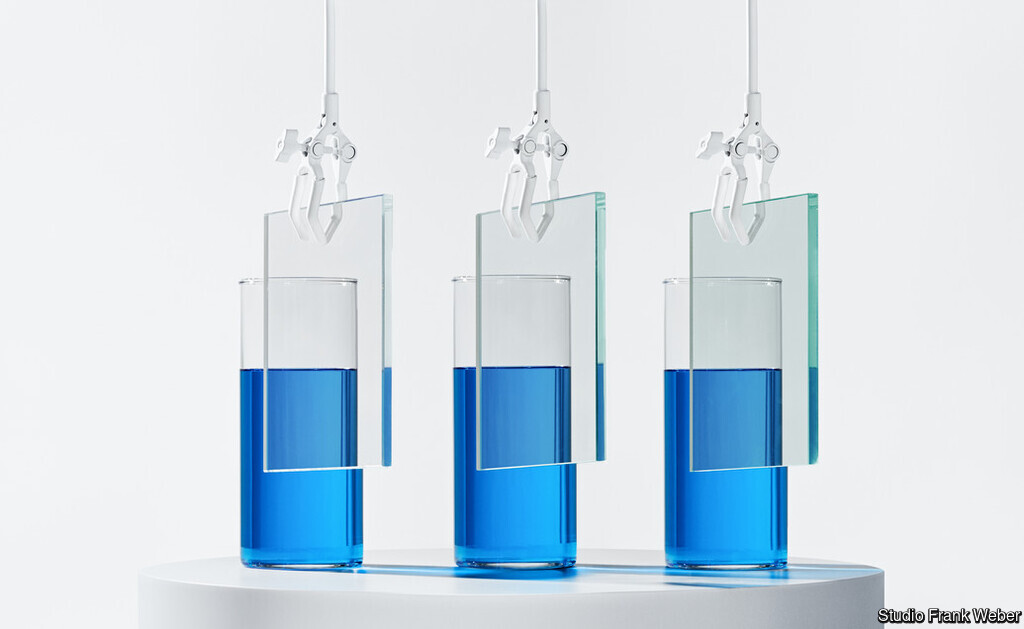
On the picture from left to right: Guardian UltraCear™ glass, Guardian CrystalClear™ glass, and Guardian Clear float glass.
Glass reflected color vs. glass transmitted color
When talking about the color of glass in facades, we usually refer to two distinct aspects:
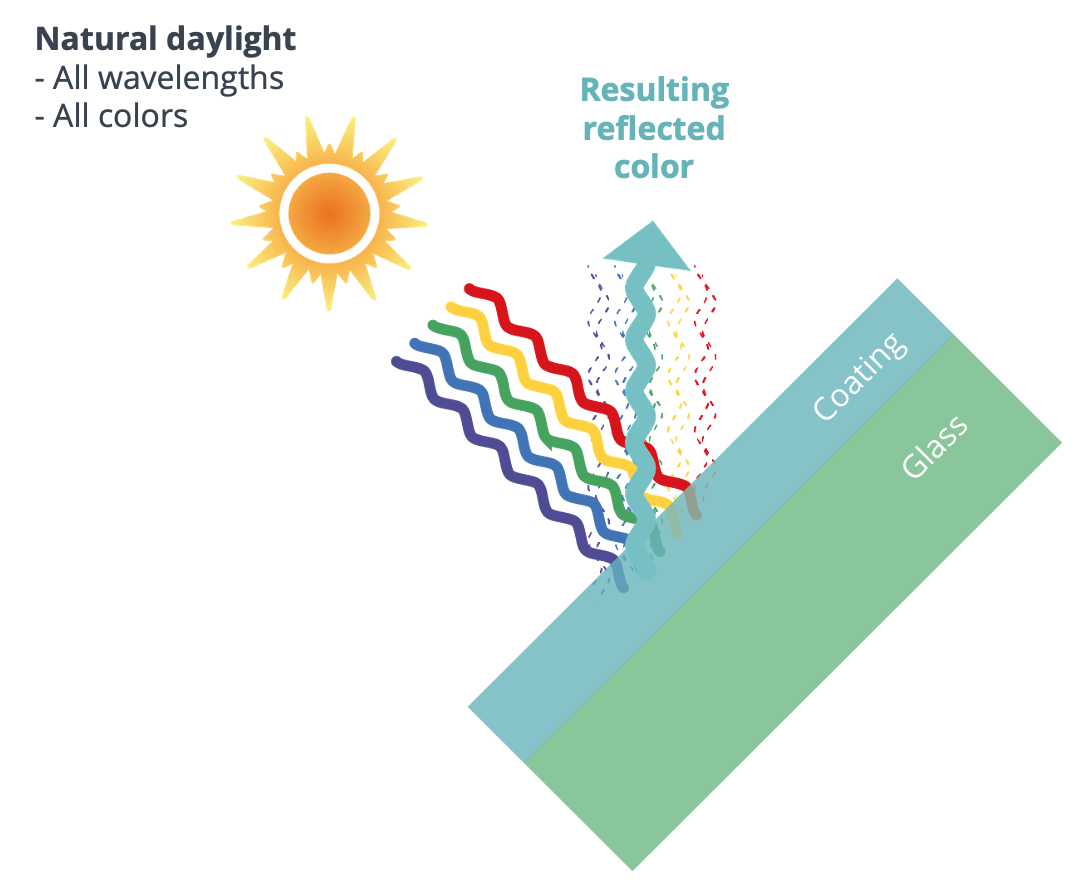
- Reflected color – the color you see when looking at the glass surface, typically during the daytime when no blinds are drawn.
- Transmitted color – the color you see when looking through the glass, usually during the day with blinds drawn, or at night when interior lights are on.
The aesthetic of glass in a facade can change depending on the time of day, weather conditions, and lighting balance between the building’s interior and its surroundings. On bright, sunny days, the reflected color often dominates — especially when the outside environment is much brighter than the inside. In the evening or at night, when interior lights are stronger, the transmitted color becomes more visible. Even cloud cover or nearby constructions can influence whether reflection or transmission is more prominent. Understanding these variables is essential when specifying glass for projects.
👉 Expert tip: Download our guide to evaluate the appearance of coated glass samples
How coatings influence glass aesthetics
Sputter low-E coatings are thin layers of metal oxides applied to the surface of the glass to enhance energy performance. These coatings modify and refine the level of reflected color of the glass, adding subtle tints and reflective characteristics that may shift with viewing angle.
But glass color is not determined by the coating alone. Both the base glass (called the substrate) and the coating play a role in how the glass looks—affecting both reflected and transmitted color, including what’s seen from the building’s interior.
When a tinted substrate is used, it provides a uniform, consistent color that defines the overall tone of the glass. This color remains stable across viewing angles and is visible in both reflection and transmission.
When combining tints with low-E coatings, the substrate provides the base tone and the coating fine-tunes it—making the final appearance a carefully balanced combination of both elements.
Coated glass offers a wider range of color options and good control over neutrality and reflectivity.
- Solar control coatings reduce heat gain and can create a metallic or tinted appearance
- Low-e coatings improve insulation and may subtly shift reflected or transmitted color
- High-performance coatings like double or triple-silver coatings, improve both efficiency and neutrality
Our SunGuard™ low-E glass products:
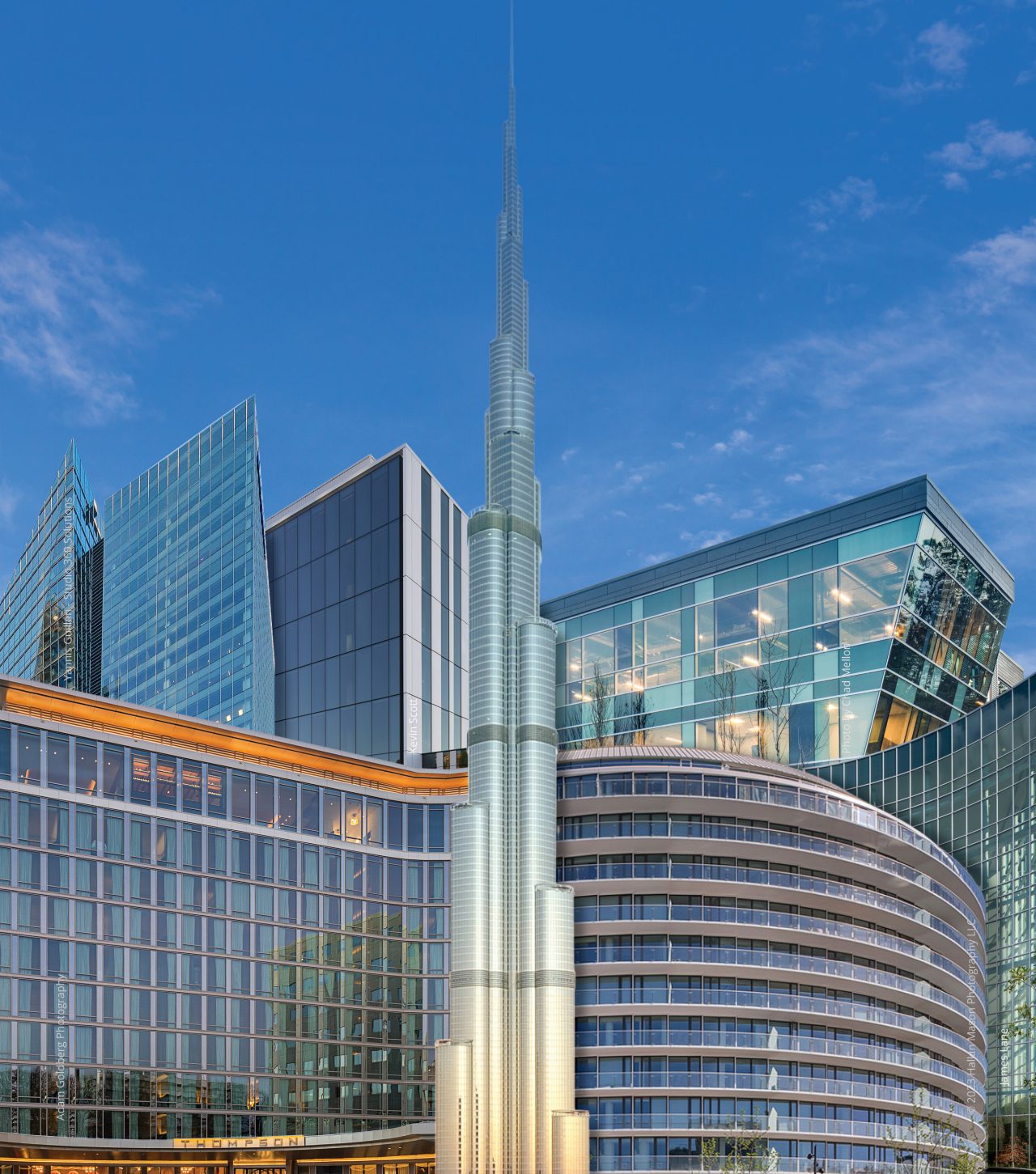
Our range of low-E products combine solar control, light transmission and low solar heat gain properties with a range of color and appearances to help accommodate many application.
How is glass color specified and monitored?
We specify color using a 3D coordinate convention called the L*a*b* color system. Any color can be described as a point within its 3D color space.
- The L* axis extends from zero, representing black, vertically upward to 100, representing white.
- The a* axis proceeds from green (in the negative region) to red (in the positive region).
- The b* axis advances from blue (in the negative region) to yellow (in the positive region).
The ΔE (delta E) value measures color difference. A ΔE < 3 is usually considered imperceptible to the human eye.
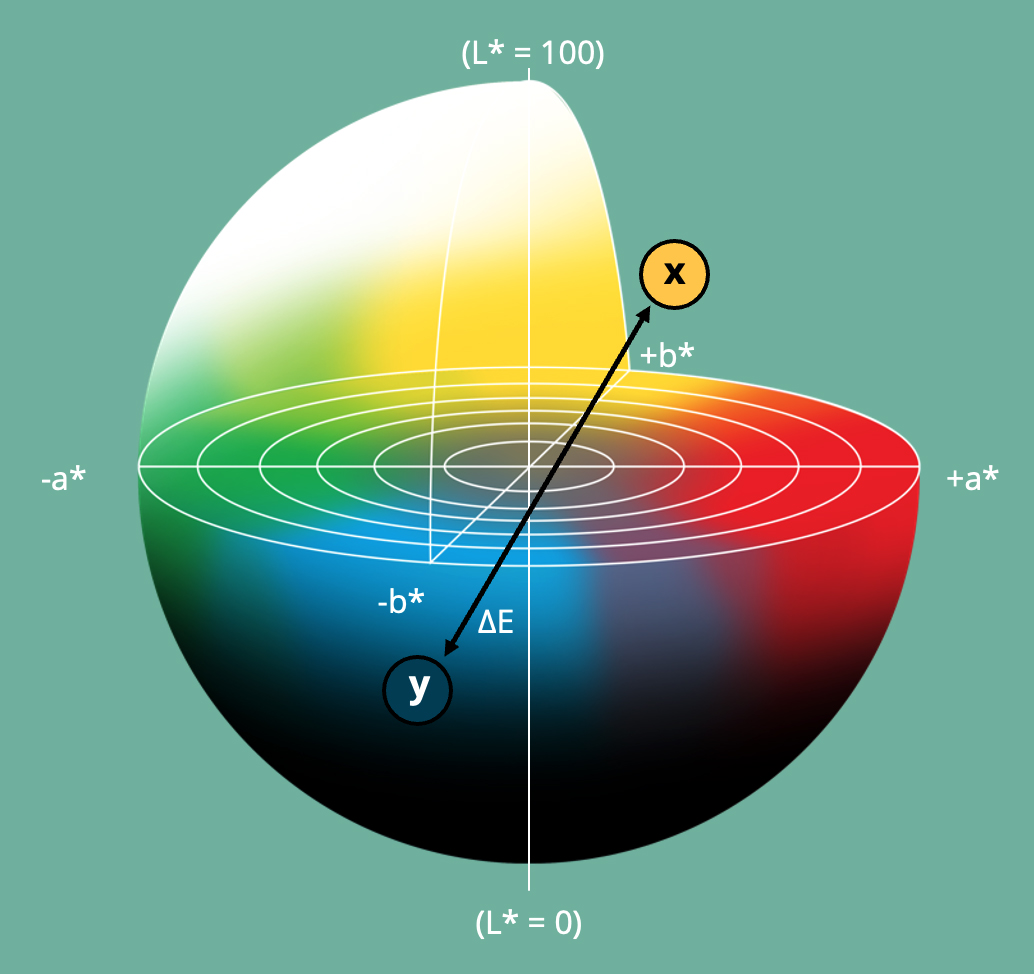
Coated glass manufacturers monitor these values to help ensure color consistency across batches, particularly for coated glass used on large facades. In some regions, there are third-party standards for coating color. However, manufacturers may produce coated glass to tighter color tolerances than the standards.
Tools to evaluate glass appearance
Evaluating the aesthetic of glass goes beyond samples on a table — it requires context. Lighting conditions, viewing angles, building orientation, and sky conditions all impact how glass looks in the real world. That’s why we have developed innovative tools to support glass selection.
The Project Locator uses Google Street View to showcase real buildings around the world glazed with Guardian products, helping you see how glass performs in real environments.
The Glass Visualizer allows you to compare Guardian glass products, spandrel options, and bird-friendly solutions side by side — across different viewing angles, sky conditions, and global regions. The tool generates photo-realistic renderings of exterior glazing, letting you visualize glass on a virtual building from multiple perspectives.
These resources are powerful companions to real-world sample viewing — helping you narrow down options before committing to full-size mockups or site evaluations.

