

Innovating to improve the energy efficiency of our manufacturing

Making float glass is energy-intensive. Improving the energy efficiency of our manufacturing is therefore one of the most meaningful ways we can improve our environmental performance. We work at this continuously. We refine how our existing furnaces run, and we explore new melting technologies and digital tools to go further.
A glass furnace can operate for upwards of 20 years between major rebuilds, so the opportunities to make significant technology changes are relatively few. That is why, in an industry like ours, even small efficiency gains matter. Applied across a furnace that runs continuously for many years, each improvement can add up to a noticeable reduction in energy use and associated emissions. Below are some of the technologies and approaches our teams are working with today.
A new furnace technology at our Bascharage plant
At our plant in Bascharage (Hautcharage), Luxembourg, we introduced an advanced melting technology during the furnace rebuild that took place in 2023. The new furnace features a heat recovery system that preheats the pure oxygen and natural gas used in the melting process. This helps reduce heat losses and gas consumption, without compromising the quality of the glass. Compared with the standard air and fuel furnace it replaced, the new furnace is around 25% more energy efficient, and reduces associated CO2 emissions by around 20%.
Exploring electric melting technology
Electric boosting is one technology the glass industry is evaluating to improve manufacturing performance and expand energy source options. It delivers energy directly into the molten glass through submerged electrodes. Because the energy is released within the melt rather than transferred from the combustion space above, it can improve energy-transfer efficiency.
Depending on the application, electric boosting can provide additional flexibility in how energy is supplied to the furnace. Increased use of electricity within the melting process may also influence associated emissions, depending on factors such as technology design, operating conditions, and the electricity sources available.
We explored the use of electric melting technology at our Goole plant in the United Kingdom through a project with Glass Futures and other partners. Guardian Glass is a founding member of Glass Futures, a not-for-profit research and technology organization supporting research, development and training across the glass industry. During the trial, the project demonstrated that the Goole furnace could switch between natural gas and electric energy while maintaining process stability and glass quality. In the future, this flexibility may provide additional options for how energy is supplied to float glass furnaces.
The potential benefits will depend on factors such as technology maturity, operating requirements, and the availability of reliable, cost-competitive electricity sources. The technology continues to be evaluated, and additional research and testing are needed to better understand its potential application in commercial float glass production.
Using data and AI to improve efficiency
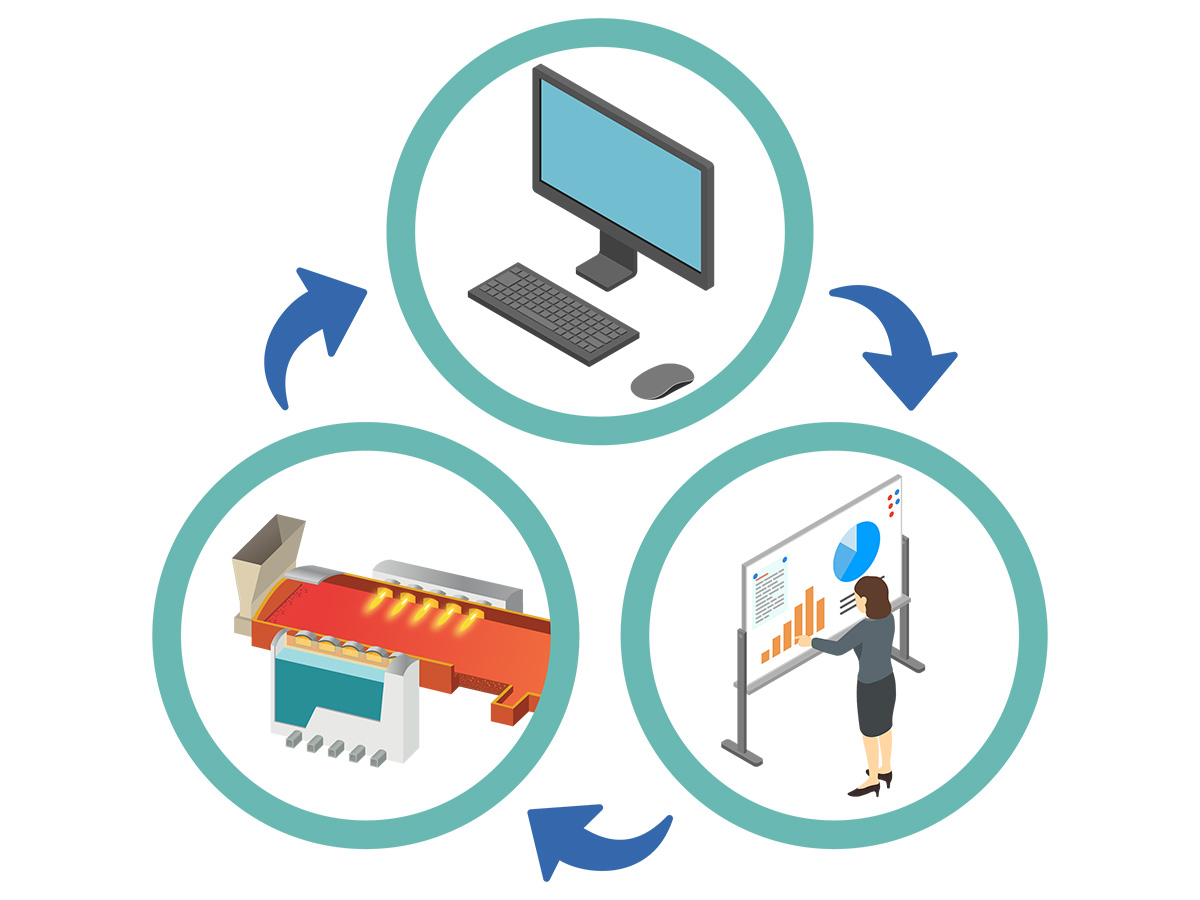
We rely on data and measurement to operate our furnaces. As analytical capabilities continue to evolve, we are able to gain deeper insights from that data and identify opportunities to improve performance. Our furnaces generate large volumes of information, and we are increasingly using advanced analytics and artificial intelligence to better understand how they behave, support product quality and identify opportunities to improve energy efficiency. Artificial intelligence supports this work, while human expertise remains central to how we operate and to the decisions we make. Below are some examples of how we put this into practice.
Predicting quality and optimizing efficiency
The Expert System is a predictive control tool that we have installed on all our float glass lines worldwide. It continuously monitors furnace conditions and automatically adjusts energy input to support stable furnace operation. By supporting a more stable process, it can help reduce variation, improve energy efficiency and support improvements in glass quality.
Based on a sampling of our sites, we have seen energy consumption savings of around 1% per line*.
Furnace Insights takes the Expert System a step further. Developed with a technology partner and exclusive to Guardian Glass, it uses artificial intelligence and computational modeling to help predict the quality of the glass a furnace will produce up to 48 hours in advance, and recommend operating adjustments that support efficient furnace performance.
We piloted Furnace Insights at one of our plants, and we are now scaling it across our operations. At the plant where it has been tested, it has contributed to further gains of around 1.4% in energy efficiency and 0.5% in yield*.
Optimizing combustion with excess oxygen control
Combustion efficiency is a key contributor to furnace performance. Oxygen sensors installed in the furnace regenerators continuously measure excess oxygen present during combustion and enable automatical adjustment of the air-to-fuel ratio. This closed-loop control system helps improve combustion efficiency, which may reduce energy usage and associated emissions.
In the two plants where it has been tested, it has contributed to energy usage savings of around 0.5 to 0.8%.* Based on these results, we have expanded the use of this technology to multiple Guardian Glass plants.
*Results are based on specific plant implementations and may vary depending on furnace design, operating conditions and other site-specific factors.

