

Innovation to help you achieve your environmental goals

Innovation is central to how we work. We continuously explore new technologies to develop glass products that can help our customers meet their environmental goals. Much of this work is driven by our Guardian Technology and Development (GTD) team, where specialists in material science and engineering develop new coatings, products and technologies. An important part of our approach is to design solutions that meet evolving regional or global market demands, and can be made available to many customers and project types — not innovations that remain within reach of only a few. Below are some examples of innovations that can help project teams work toward their environmental goals.
Vacuum Insulated Glass (VIG): advancing thermal insulation
Vacuum insulating glass (VIG) is a glazing technology designed to deliver high levels of thermal insulation. It uses a vacuum between two glass panes to reduce heat transfer, achieving low U-values (and high R-values) within a slim, lightweight profile. These characteristics can bring several benefits:
- Better-insulating glazing can help reduce the energy a building needs for heating and cooling, which can contribute to lowering its operational carbon;
- The slim, lighter build can ease handling and reduce structural load;
- Because it uses less material than an standard double or triple-glazed unit, VIG can help lower the embodied carbon of the glazing.
- The vacuum gap can help improve acoustic performance by reducing the transmission of outdoor noise.
The comparison table below highlights how VIG excels in raising R-values while lowering U-values compared to other glazing configurations – helping to improve overall thermal performance:
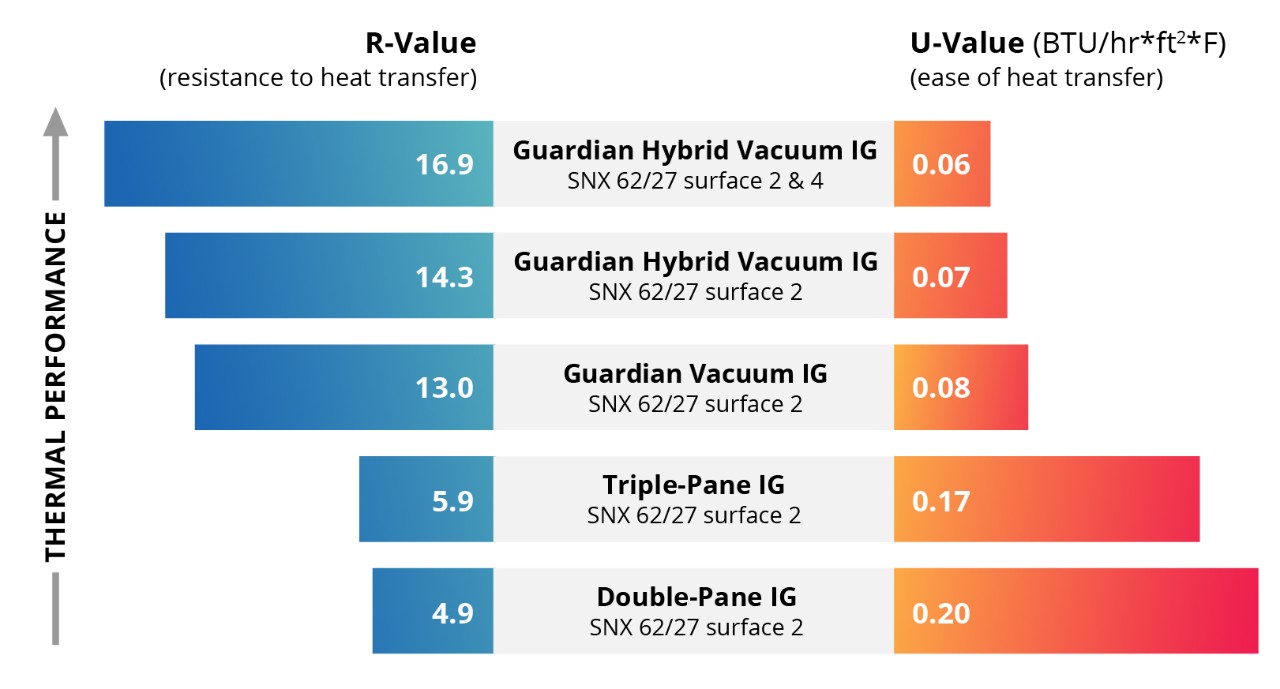
Performance values for standard double- and triple-IGUs with 6mm glass and 12.7 mm argon filled gaps. Guardian Vacuum IG 4mm/0.3mm gap/4mm. Guardian Hybrid Vacuum IG 6mm/12.7mm gap/4mm/0.3mm gap/4mm.
A hybrid VIG combines a VIG unit with an additional glass pane and a traditional air- or argon-filled gap, blending the insulating performance of VIG with the benefits of conventional double glazing.
VIG remains an area of active development for us, and we continue to explore how the technology could be applied in future building projects. As part of this work, we are collaborating with the VELUX Group under a joint development agreement to advance tempered VIG technology and develop manufacturing processes and capabilities.
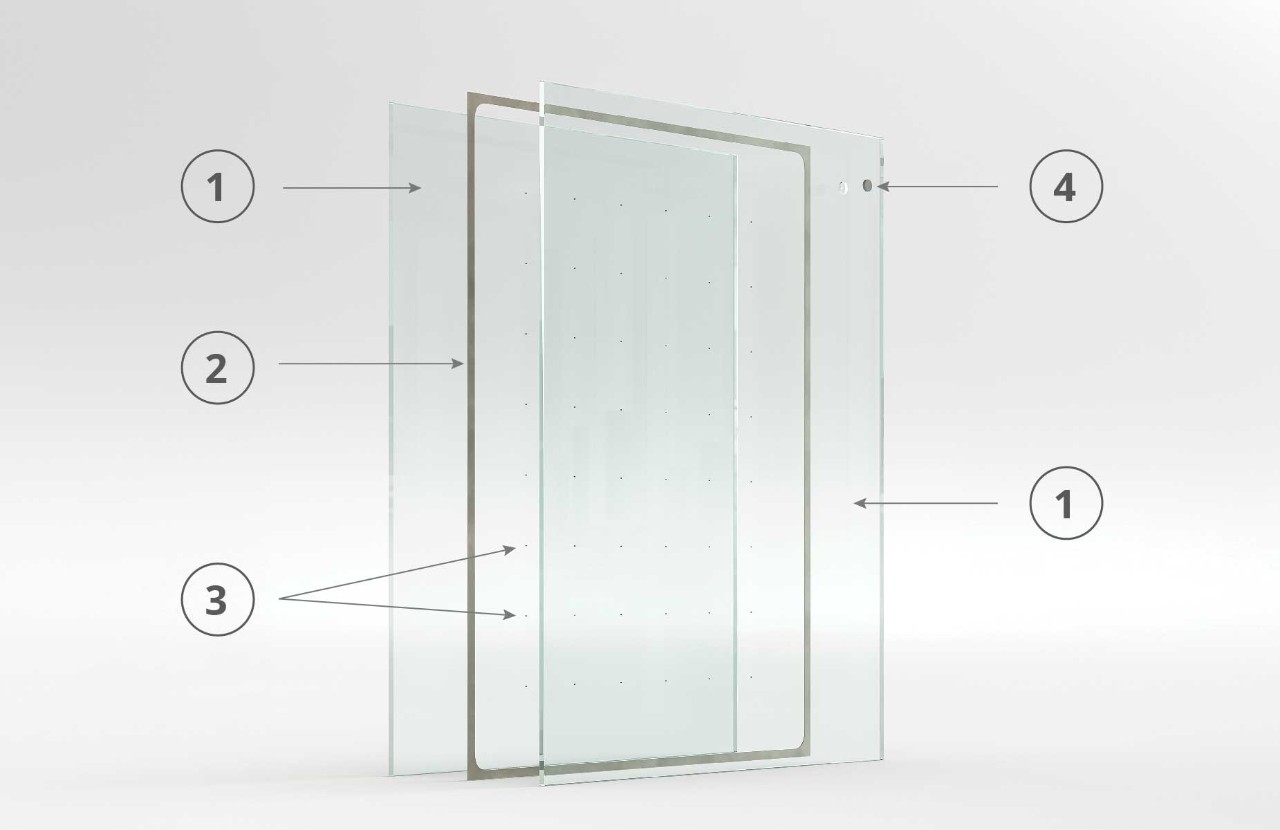
- Tempered glass lite
- Hermetic edge seal
- 0.3mm microscopic pillars
- Vacuum seal
Guardian Bird1st: a range of solutions for different goals
Large areas of glass can pose a collision risk to birds, which may not perceive glass as a solid surface. Because every project weighs bird collision deterrence, aesthetics, energy performance and local requirements differently, we offer a portfolio of bird-friendly solutions rather than a single answer.
Guardian Bird1st™ Lami is a laminated glass with an interlayer incorporating a pattern of small reflective markers that catch the light, helping birds recognize the glass while staying discreet for people.
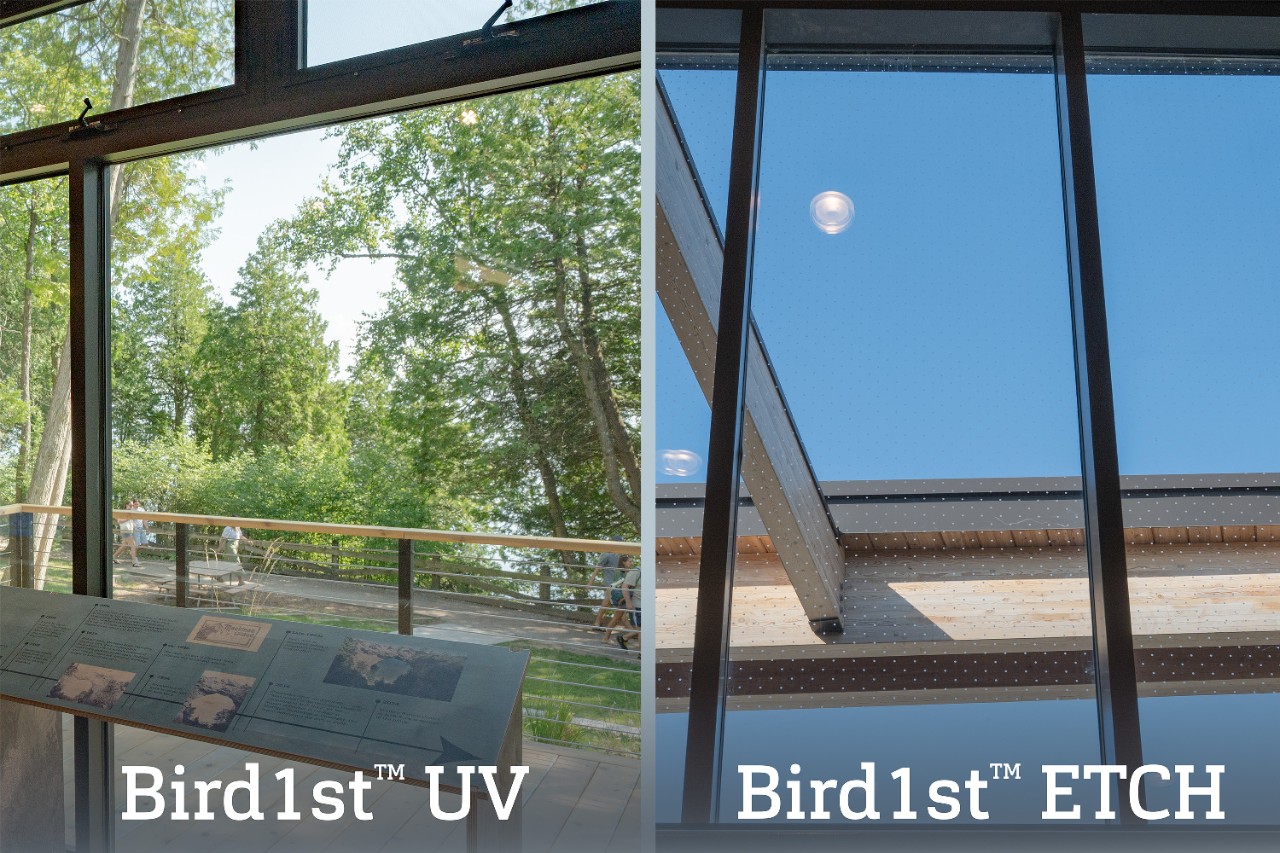
- Guardian Bird1st™ Etch uses an established etching process to create a visible surface pattern — a suitable option where a more visible deterrent is acceptable or desired.
Guardian Bird1st™ UV uses a patterned UV-reflective coating designed to be difficult for people to see, helping preserve clear, open views where a highly transparent appearance matters.
Across the portfolio, deterrent patterns can be paired with a wide range of our SunGuard™ high-performance coatings, to help project teams balance bird-friendly requirements with energy performance and design intent.
Availability and applicable bird-friendly requirements vary from one region to another, so we'd encourage you to check with your local Guardian Glass team which solutions are available and suitable for your project.
Guardian BPC: efficiency in glass processing
Guardian BPC (Burnable Protective Coating) is a temporary protective coating designed to give added protection to our heat-treatable coated products during transport and processing. By reducing the risk of scratches and quality defects, it can help improve overall yield and reduce waste. Compared with the same coated glass processed without the protective coating, it can also help reduce tempering times by up to approximately 12%, depending on glass thickness and furnace type, which can contribute to improving the energy efficiency of the glass processing.
Guardian NEXA™: a range of lower carbon glass solutions
Guardian NEXA™ is a range of lower carbon float glass solutions designed to help reduce the embodied carbon of architectural façades, with options suited to different project specifications and budget considerations.
There is more than one way to achieve a lower carbon glass — by improving the energy efficiency of the manufacturing process or by increasing the proportion of cullet (broken or rejected glass) used. The range brings these approaches together in solutions with different levels of embodied carbon reduction, so project teams can choose the option that best fits their carbon targets, timelines and budget — all documented through third-party verified Environmental Product Declarations.
Guardian NEXA maintains the optical quality of standard glass and can be coated and/or laminated with our high-performance products to add energy efficiency, safety, security or bird-friendly performance.
Guardian NEXA is produced in Europe and may not be available in all regions, so we'd encourage you to check availability with your local Guardian Glass team.

